Low blood sugar is a common condition where your blood glucose levels drop too low. Also called hypoglycemia (hypoglycaemia), it happens most often in people with diabetes but can affect anyone. Since glucose provides energy for your brain and body, a sudden drop can cause warning signs and health risks.
This guide explains hypoglycemia symptoms, causes, treatment, and prevention tips to help you recognize and manage low blood glucose episodes.
What Is Hypoglycemia?
Hypoglycemia means low blood sugar. Your blood glucose levels fall below a healthy range. This can happen quickly. It can also happen without much warning.
According to CDC, for most people with diabetes, hypoglycaemia means a reading below 70 mg/dL. For people without diabetes, it’s usually below 55 mg/dL. These numbers matter. They help doctors and patients know when to act.
Glucose is your body’s main fuel source. Your brain runs almost entirely on it. So when blood sugar drops, your whole body feels it. You may feel shaky. You may feel confused. In serious cases, it can turn dangerous fast.
Low blood glucose is most common in people who take insulin. But it’s not only a diabetes problem. Certain medications, alcohol, and health conditions can trigger it too.
Low Blood Sugar: Symptoms
Knowing the signs of a blood sugar drop can save your life. Symptoms often start around 70 mg/dL. But if your blood sugar drops fast, symptoms may show up earlier.
Every person is different. Symptoms can also change from one episode to the next.
Hypoglycemia: Early Warning Signs
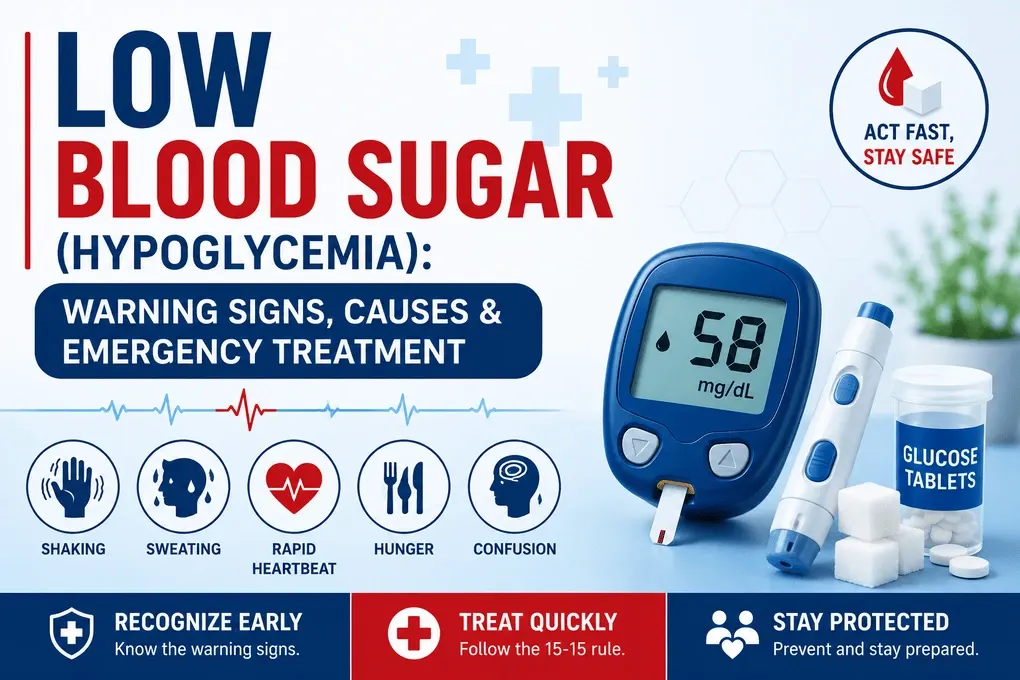
Your body releases stress hormones when glucose drops. This causes early low glucose symptoms, including:
- Shaking or trembling
- Sweating and chills
- Rapid heartbeat
- Dizziness or lightheadedness
- Extreme hunger
- Weakness or fatigue
- Confusion or trouble concentrating
- Anxiety or irritability
- Pale skin
These are your body’s alarm bells. They tell you something is wrong. Don’t ignore them.
If your blood sugar runs high often, your body may adjust. This means you could feel symptoms of hypoglycemia even at higher numbers than usual. Learn the warning signs and causes of high blood sugar before it leads to serious complications.
Severe Low Blood Glucose Symptoms
Severe cases are different. They’re more dangerous.
Watch for these blood sugar drop symptoms:
- Blurred or double vision
- Slurred speech
- Poor coordination
- Confusion or disorientation
- Loss of consciousness
- Seizures
This stage is a medical emergency. Severe hypoglycemia symptoms need fast action. Call for help right away.
Hypoglycemia While Sleeping
Hypoglycemia can happen at night too. This is called nocturnal hypoglycemia. It can cause restless sleep. It may cause night sweats. Some people report nightmares.
If you wake up drenched in sweat, pay attention. It could be a sign your blood glucose levels dropped overnight.
Low Blood Sugar: Causes
The causes depend on whether you have diabetes or not. Let’s break both down.
Blood sugar crash in Diabetes
Hypoglycemia in people with diabetes usually links back to treatment. Common triggers include:
- Taking too much insulin
- Injecting insulin into muscle instead of fat
- Timing insulin wrong with meals
- Taking too much diabetes medication
- Exercising more than usual
- Drinking alcohol without food
- Skipping or delaying meals
Insulin causing low glucose levels is one of the most common issues doctors see. Getting the dose and timing right matters a lot.
Pregnant individuals with Type 1 diabetes face extra risk too. Hormone shifts in early pregnancy can trigger drops.
Hypoglycemia Without Diabetes
Low blood glucose without diabetes is less common. But it does happen. There are two main types.
Reactive hypoglycemia happens after eating. It usually shows up two to four hours after a meal. Doctors aren’t fully sure why it happens. But it may relate to a sharp rise and fall in blood sugar after eating simple carbs like white bread or pastries.
Bariatric surgery can also cause reactive hypoglycemia symptoms. Food moves through the body faster after surgery. This triggers extra insulin release.
Fasting hypoglycemia is different. It happens after long periods without food. Factors include:
- Heavy alcohol use over several days
- Serious illness, like liver or kidney failure
- Low cortisol levels (adrenal insufficiency)
- Rare tumors that affect insulin production
- Insulinoma, a rare pancreas tumor
If you’re wondering, “why does my blood sugar drop after eating,” reactive hypoglycemia is often the answer. A proper medical evaluation can help identify the underlying cause.
Hypoglycemia Unawareness
Some people stop noticing the early warning signs of glucose levels drop. This condition is called hypoglycemia unawareness. Without these warning symptoms, severe episodes can happen suddenly and may be harder to recognize.
How Is Low Blood Sugar Diagnosed?
If you have diabetes, checking your blood glucose levels at home can confirm it quickly.
If you don’t have diabetes, your doctor may run a supervised fasting test. This checks how your body handles going without food.
Doctors may also use a mixed-meal tolerance test. You drink a mix of protein, fat, and sugar. Then your provider checks your blood sugar over several hours. This helps confirm reactive hypoglycemia.
Getting a clear diagnosis helps you and your doctor build the right treatment plan.
How to Treat Blood Glucose Deficiency Quickly
Knowing how to treat hypoglycemia fast matters. Mild to moderate cases respond well to quick action.
The 15-15 rule for low sugar levels
This is the go-to method for how to raise blood sugar level quickly: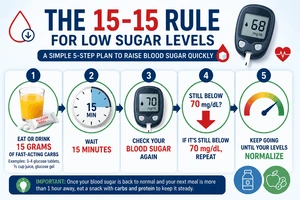
- Eat or drink 15 grams of fast-acting carbs.
- Wait 15 minutes.
- Check your blood sugar again.
- If it’s still below 70 mg/dL, repeat.
- Keep going until your levels normalize.
Foods That Raise Blood Sugar Quickly
Wondering what to eat when blood sugar is low? Good options include:
- Glucose tablets or gel
- Fruit juice (small glass)
- Regular soda (not diet)
- Honey or sugar
- Hard candy
Kids often need smaller amounts. Check with a pediatrician for the right dose for your child.
When Should You Seek Medical Care?
Not every episode needs emergency treatment. But some situations should never be ignored.
Contact your healthcare provider if:
- You have repeated low blood sugar episodes.
- Your symptoms keep returning despite eating.
- Your blood sugar drops often without a clear reason.
- You don’t have diabetes but experience frequent hypoglycemia.
- Your medication no longer seems to prevent blood sugar drop.
Seek emergency medical care immediately if someone with hypoglycemia:
- Faints or loses consciousness.
- Has a seizure.
- Cannot swallow safely.
- Doesn’t improve after emergency glucagon treatment.
Early medical care can help identify the cause and reduce the risk of future severe episodes.
Emergency Treatment for Severe Hypoglycemia
Severe hypoglycemia requires emergency glucagon. This medicine tells your liver to release stored glucose. It comes as an injection or nasal spray.
Someone else usually needs to give glucagon because the affected person may be unconscious or unable to swallow safely.
After giving glucagon, place the person on their side in case they vomit. Never give food or drinks to someone who is confused or unconscious because they could choke.
Is Hypoglycemia Dangerous?
Yes. Most mild episodes improve quickly with treatment. However, severe or repeated hypoglycemia can become life-threatening if it isn’t treated promptly. Driving, operating machinery, or performing other activities during a low blood sugar episode can also be dangerous.
Complications of Severe Hypoglycemia
Severe or untreated hypoglycemia can lead to serious health problems, including:
- Falls and injuries
- Seizures
- Irregular heartbeat
- Brain injury from prolonged hypoglycemia
- Coma
- Death in rare, untreated cases
Frequent severe episodes may increase the risk of future hypoglycemia because warning symptoms become harder to recognize over time.
Who Is Most at Risk of Hypoglycemia?
Anyone can develop hypoglycemia, but some people have a higher risk than others.
You may be more likely to experience blood sugar crash if you:
- Have Type 1 diabetes.
- Use insulin or certain diabetes medications.
- Are an older adult.
- Are pregnant and have diabetes.
- Have had bariatric (weight-loss) surgery.
- Have kidney disease, which can slow the removal of insulin from the body.
Knowing your risk can help you take extra precautions. Following your treatment plan, eating regular meals, and avoiding skipped meals can reduce your chances of developing hypoglycemia.
How to Prevent Low Blood Sugar Episodes
Preventing low blood glucose episodes isn’t always easy. But small changes help a lot.
Try these tips:
- Keep snacks nearby at home and on the go
- Wear a medical alert bracelet if you have diabetes
- Teach family and friends the signs of sugar crash
- Keep emergency glucagon on hand
- Check your blood sugar regularly
- Talk to your doctor about adjusting medication timing
If low blood sugar happens often, your treatment plan may need adjustment. Small changes to your medication schedule, meals, or activity level can make a big difference.
If your blood sugar tends to stay high instead of dropping, these natural ways to treat high blood sugar may help support healthier glucose levels.
Frequently Asked Questions About Low Blood Sugar
Can stress cause low blood sugar?
Yes, but it’s less common than stress causing high blood sugar. Stress can affect how your body uses glucose. In people with diabetes, stress, changes in eating habits, or certain medications may contribute to low sugar episodes.
Can dehydration cause low sugar levels?
Dehydration doesn’t directly cause low blood sugar, but it can worsen symptoms like dizziness, weakness, and confusion. Staying hydrated supports healthy blood sugar balance.
Can low blood glucose cause headaches?
Yes. A headache is a common symptom of hypoglycemia. It often occurs with sweating, shaking, hunger, or trouble concentrating and usually improves after blood sugar returns to normal.
What should you eat after hypoglycemia?
After the 15-15 rule, eat a balanced snack or meal if your next meal is over an hour away. Combine carbs with protein to help stabilize blood sugar.
Conclusion
Low blood sugar is common, but it’s manageable. Learning your personal warning signs makes a real difference. Whether you have diabetes or not, understanding hypoglycemia symptoms helps you act fast.
If you notice frequent drops, don’t wait. Talk to your healthcare provider. A few small changes to your routine could prevent future episodes. And if you don’t have diabetes but keep having symptoms, get checked out. It’s rare to find a serious cause, but it’s always worth ruling out.
Staying informed is the best tool you have against low blood glucose emergencies.
Disclaimer: This article is for informational purposes only and is not intended as medical advice. It should not replace guidance from a qualified healthcare provider. Always consult a doctor for diagnosis and treatment of low blood sugar or any other health condition.
Reference:
Hypoglycemia
—————————————–
You may also be interested in:
Ayurvedic remedies for stress relief
Natural remedies for insomnia